This Project
Stop daydreaming, they say.
Actually, no.
The world has changed.
The future belongs to the dreamers.
That is why Sacred Geometry School exists.
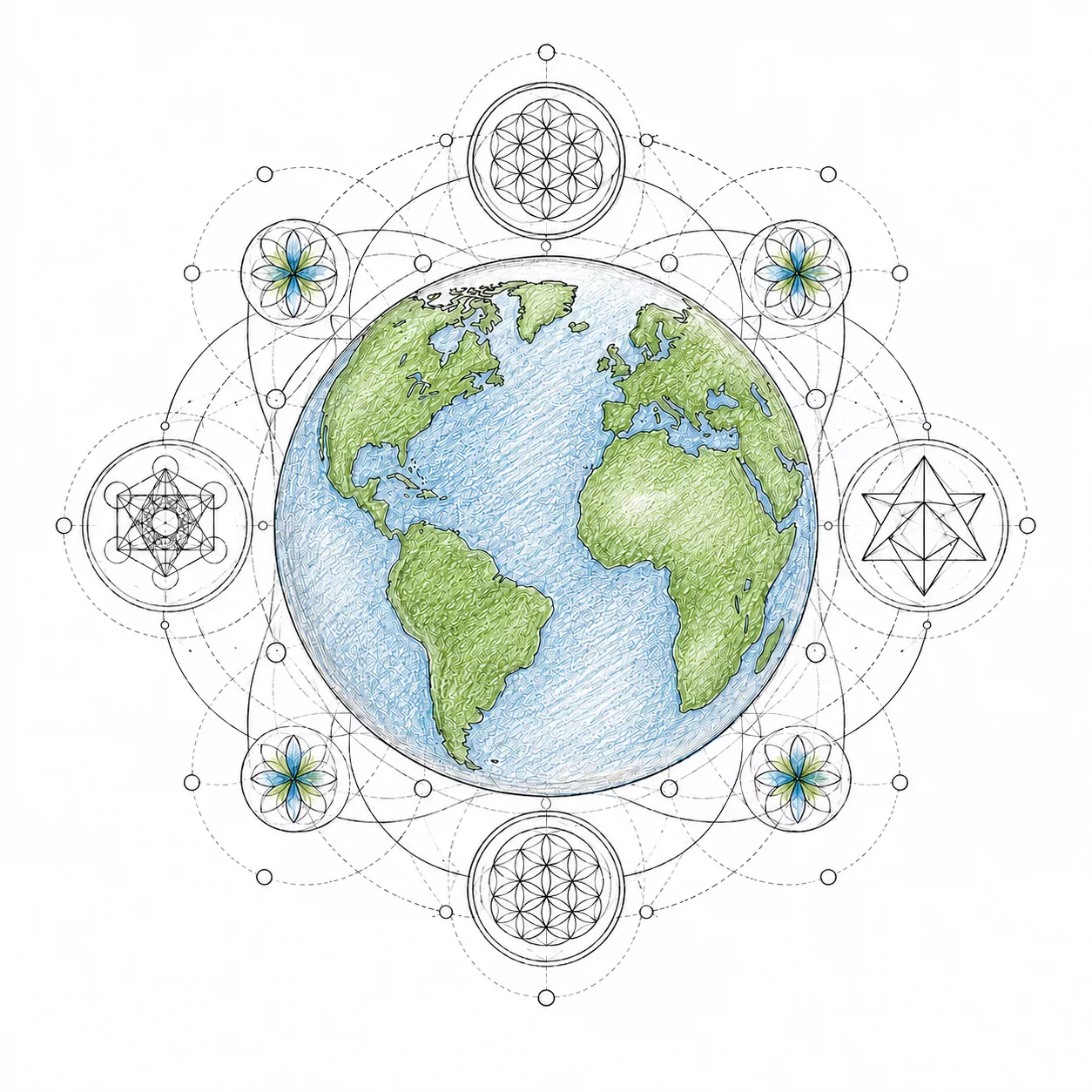
The world is becoming more interconnected, more technological, and easier than ever to shape with ideas. As powerful new creative tools become increasingly available, the distance between imagination and creation is shrinking.
That matters.
Old Model
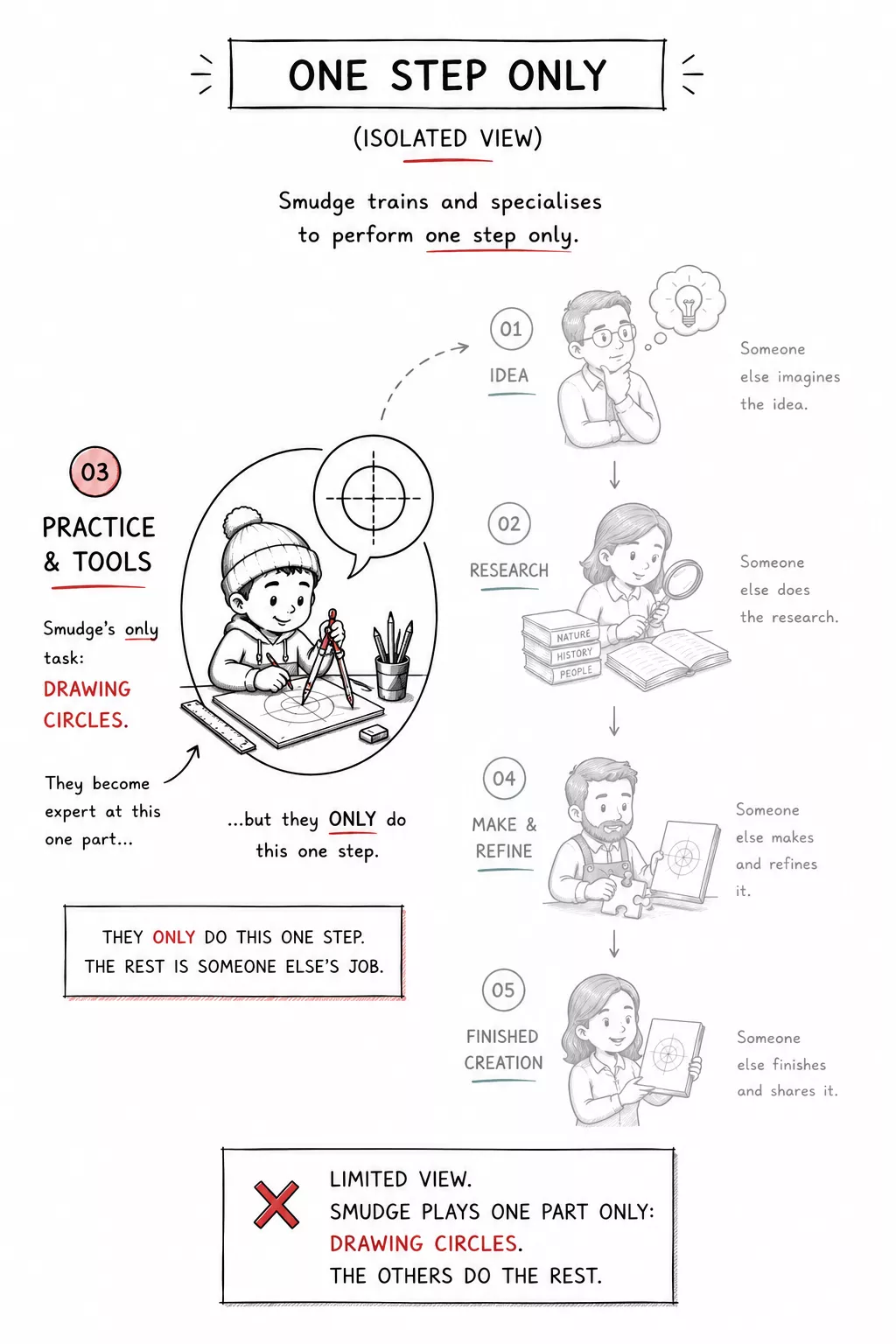
Until recently, the ability to transform imagination into creation was often reserved for the few: those with the resources, training, access, or infrastructure to bring ideas into the world.
Turning an amazing idea into reality usually required years of specialised knowledge, expensive tools, large teams, or access to institutions that most people simply did not have.
Education often reflected this world: children were prepared to specialise, follow procedures, and contribute one part to a much larger system.
One person designed.
Another calculated.
Another built.
Another edited.
Another distributed.
Together, they helped realise the ideas and direction of someone else.
A New Model
Today, ideas can move from thought into reality more quickly than ever before. Far fewer huge budgets, less technical gatekeeping, and much less friction.
Value is moving away from performing one isolated step in a larger process, and toward understanding, guiding, and shaping the whole journey from idea to creation.
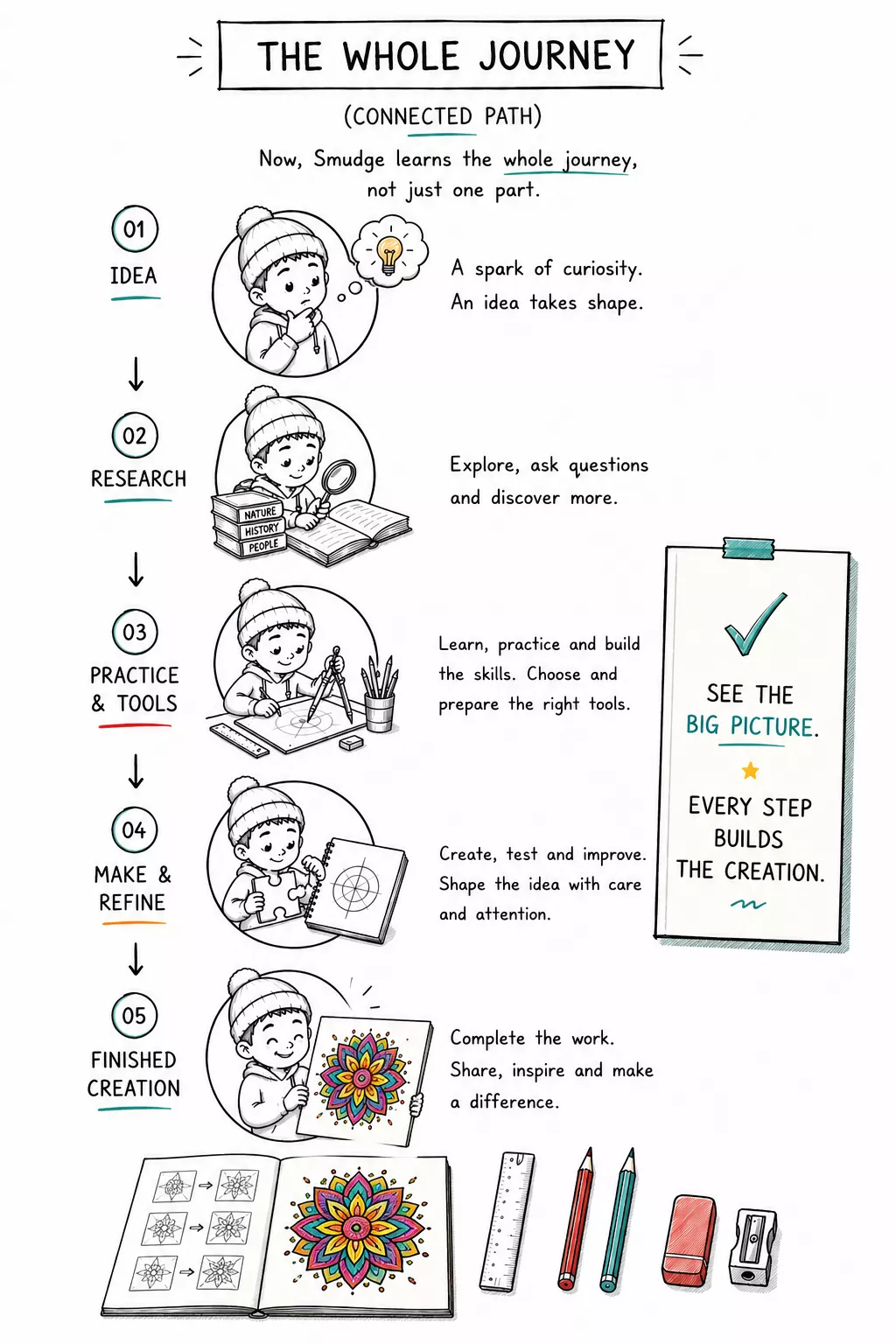
This shift suggests a very different kind of education — and a different way to nurture young minds.
Not just memorisation and repetition, but creativity, adaptability, judgement, refinement, and the ability to connect ideas together.
In the old model, the question was often:
Can you fulfil this role?
In the new model, the question becomes:
Can you imagine, connect, shape, refine, and complete the whole thing?
A New Way of Thinking
If the old models are becoming less relevant, what kind of education makes sense now?
There may be no perfect answer. But one thing seems increasingly clear: education needs to adapt.
In this world, children may benefit from becoming connected thinkers: people who can move between ideas, notice relationships, work across disciplines, and understand how smaller parts belong to a larger whole.
This is very different from learning built around memorising information or repeating isolated procedures.
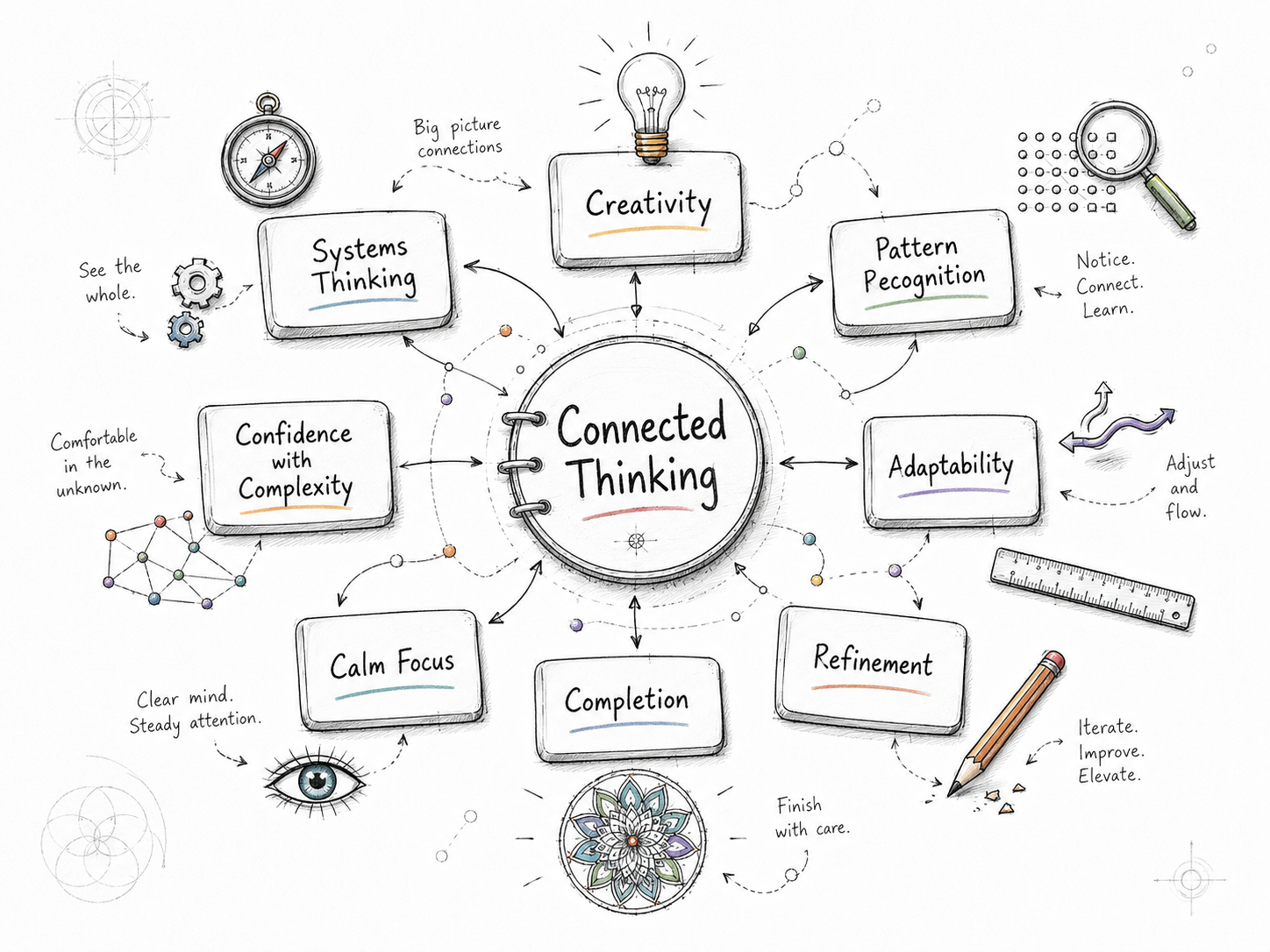
Education for connected thinking combines creativity with structure, imagination with judgement, and curiosity with calm focus. It helps children learn how to adapt, recognise patterns, explore unfamiliar problems, refine first attempts, and carry ideas through to completion.
These are the capacities children will need to operate confidently in a changing world.
Calm Enough to Create
There’s a catch.
And it’s a big one.
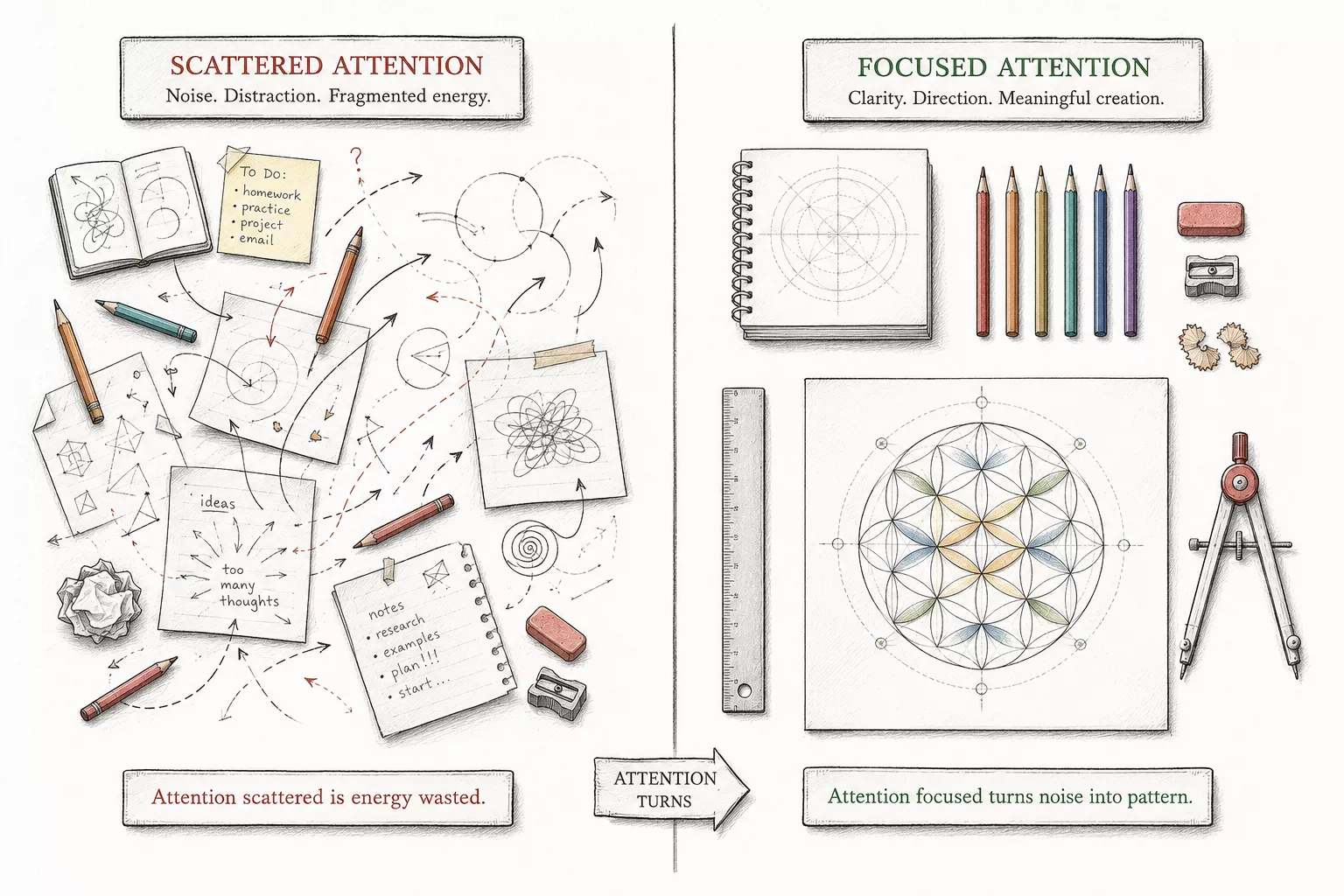
While the new model brings enormous creative possibility, it also brings an attention swamp: constant noise, distraction, stimulation, and unfinished fragments competing for focus.
That is why children need a base layer of inner competency: attention, intention, and self-regulation.
Without that foundation, the rest struggles to become meaningful.
A child may have ideas, tools, and possibilities all around them. But without the ability to direct attention, hold intention, and stay steady through the process, those possibilities can easily be directed by something else.
Their focus is pulled.
Their imagination is scattered.
Their creation is shaped from the outside, rather than from within.
Self-regulation helps children stay with an idea long enough for it to become reality.
Why Sacred Geometry?
Sacred geometry naturally brings many of these qualities together. It combines creativity with structure, imagination with logic, and exploration with precision. It invites children to think freely while also learning patience, balance, refinement, and careful attention.
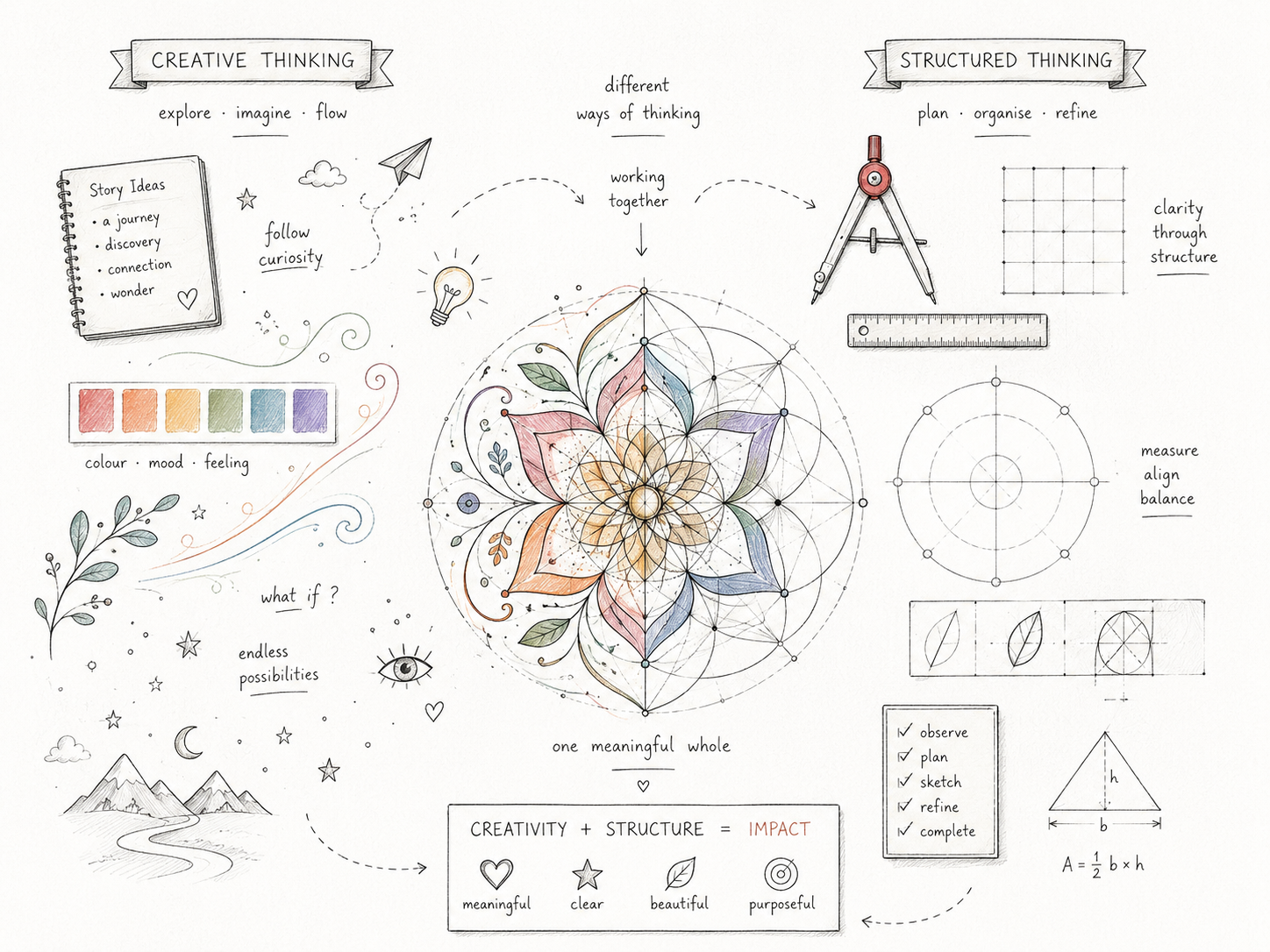
And while sacred geometry sits at the heart of the project, the wider aim is to develop these qualities broadly through stories, lessons, activities, creative projects, and hands-on explorations.
As the project develops, it will branch out into all kinds of weird and wonderful places. But the deeper pattern remains the same: helping children connect ideas, notice relationships, regulate themselves, refine their work, and turn imagination into something meaningful.
In that sense, sacred geometry is not only a subject.
It is a model.
Simple things become complex things.
Small steps become finished creations.
Separate parts become connected wholes.
That is the pattern Sacred Geometry School is built around.
Letters From Smudge
If the ideas on this page make sense to you, Smudge occasionally sends useful little things from Sacred Geometry School: creative activities, sketchbook ideas, new resources, and gentle notes about calm, curious learning.
No noise. No clutter. Nothing designed to clog your inbox.